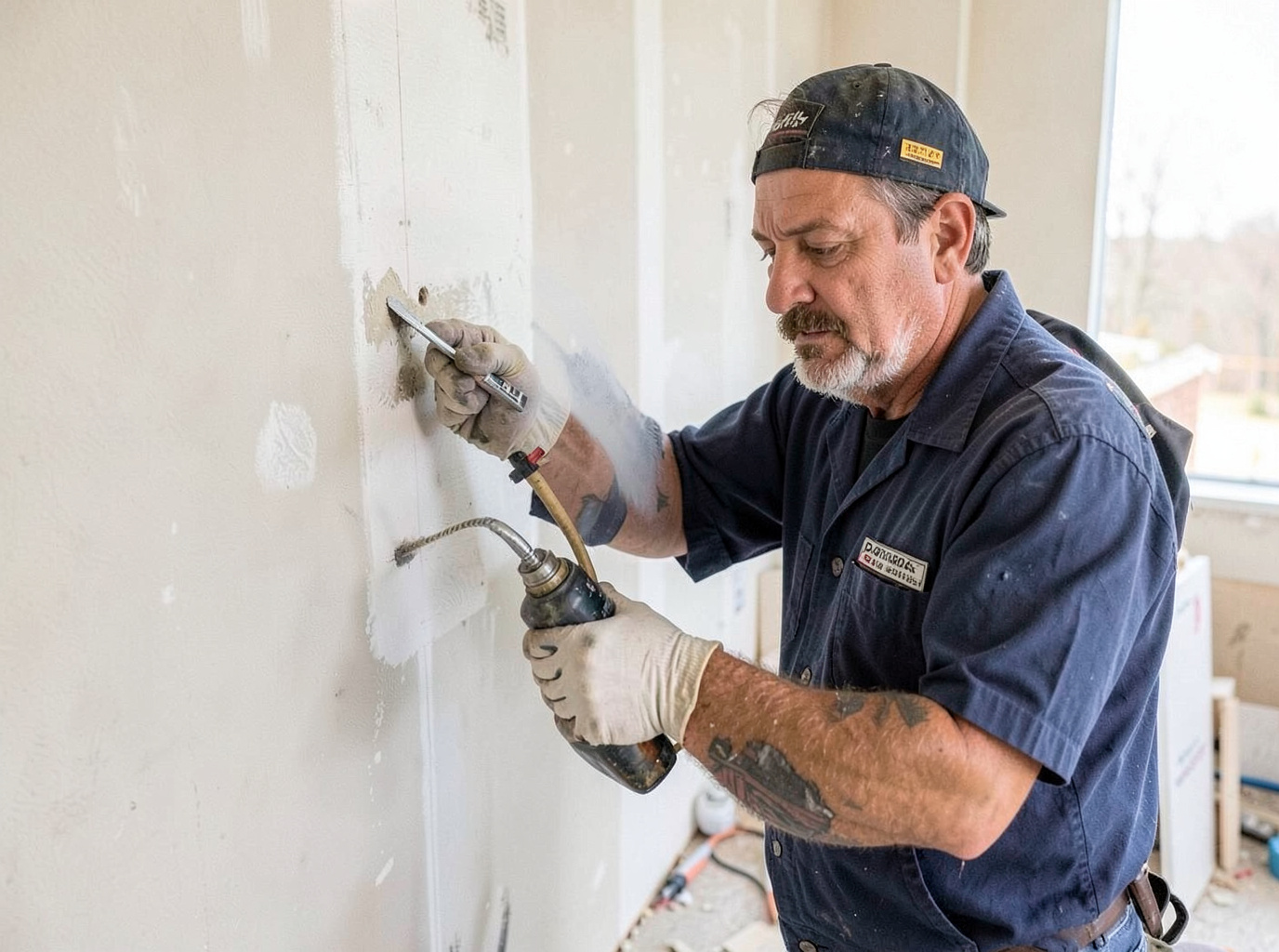
Sacramento’s cool wet winters send water through older plaster and drywall in Midtown and East Sacramento bungalows built before 1950. Moisture travels along lath and paper-faced gypsum, often stopping at the first horizontal seam or where the wall meets the foundation. A meter reading alone misses pockets behind textured finishes or under layers added during 1970s renovations common in Land Park.
Hot dry summers shrink soil around North Sacramento and South Sacramento slabs, opening gaps that let irrigation or sewer line moisture migrate upward into drywall. We check both sides of shared walls in duplexes near the American River Parkway and note any staining that reappears after the first fall rains. Code requires vapor barriers only on certain exterior walls, so interior moisture from plumbing leaks often goes undetected until it reaches the baseboard.
We map moisture gradients room by room rather than spot-checking, because Sacramento’s variable soil types shift differently under 1920s Oak Park homes versus post-war Rancho Cordova builds. Edge cases include moisture trapped behind wallpaper or acoustic tile ceilings installed in the 1960s. Homeowners in Downtown Sacramento often mistake efflorescence on brick for a roof issue when the actual source is a leaking supply line inside the wall cavity.
Technician insight
In Sacramento the thing that catches most people out with drywall moisture detection is assuming winter rain is the only culprit. Older East Sacramento and Land Park homes often have cast-iron stacks that leak slowly for years until the first hot dry summer opens soil cracks and lets the moisture reach the drywall. Checking only the obvious stain misses the real path along the slab edge.
Recurring Stain in Midtown Bungalow
A homeowner in Midtown noticed a faint brown line reappearing on a living-room wall each winter. Meter readings showed elevated moisture along the baseboard that extended six feet past the visible stain. We traced it to a pinhole in a galvanized supply line running inside the wall cavity. The line was isolated and the drywall dried without full removal.
Drywall Moisture Detection Services We Offer
✓Interior Wall Moisture Mapping
Full-room moisture gradient readings that locate the exact path of water traveling through drywall in Sacramento bungalows.
✓Ceiling Leak Detection
Non-invasive scans of textured ceilings common in Midtown and East Sacramento homes to find roof or pipe leaks before drywall sags.
✓Bathroom Drywall Moisture Check
Targeted inspection around tubs and showers where winter rains and daily use combine to push moisture into adjacent walls in Land Park and Oak Park.
✓Slab Edge Moisture Tracing
Readings along slab perimeters in North and South Sacramento homes where soil movement opens paths for irrigation water to reach drywall.
✓Post-Rain Moisture Verification
Follow-up checks after the first cool wet storms to confirm whether moisture in drywall is new or residual from older leaks.
Drywall Moisture Detection Cost in California
| Service | Typical Range | What Affects It |
|---|---|---|
| Single Room Moisture Mapping | $175–$275 | One affected room plus adjacent walls; higher in homes with heavy texture or wallpaper. |
| Whole-House Scan | $450–$650 | All interior walls and ceilings; common for Midtown and East Sacramento properties with recurring stains. |
| Bathroom or Kitchen Focused Check | $225–$325 | Includes floor-to-ceiling readings around fixtures and shared walls. |
| Follow-Up Visit After Repairs | $125–$175 | Verification scan once drywall is opened or plumbing fixed. |
Ranges are typical for California and confirmed with an exact written quote before any work starts.
How it works
- 1
Initial Walk-Through
We walk every affected room noting stains, texture changes, and known plumbing locations typical to the home’s era in Sacramento.
- 2
Meter Grid Readings
Systematic moisture meter readings on a grid pattern across walls and ceilings to build a gradient map.
- 3
Thermal Imaging Pass
Infrared scan to highlight temperature differences caused by evaporative cooling from hidden moisture.
- 4
Source Isolation
Narrow the leak origin using access points and known Sacramento construction details such as knob-and-tube wiring runs or cast-iron stacks.
- 5
Report and Recommendations
Deliver a written map with photos and prioritized next steps for repair.
Pricing
Pricing depends on square footage scanned and number of rooms. Most Sacramento jobs fall in these ranges.